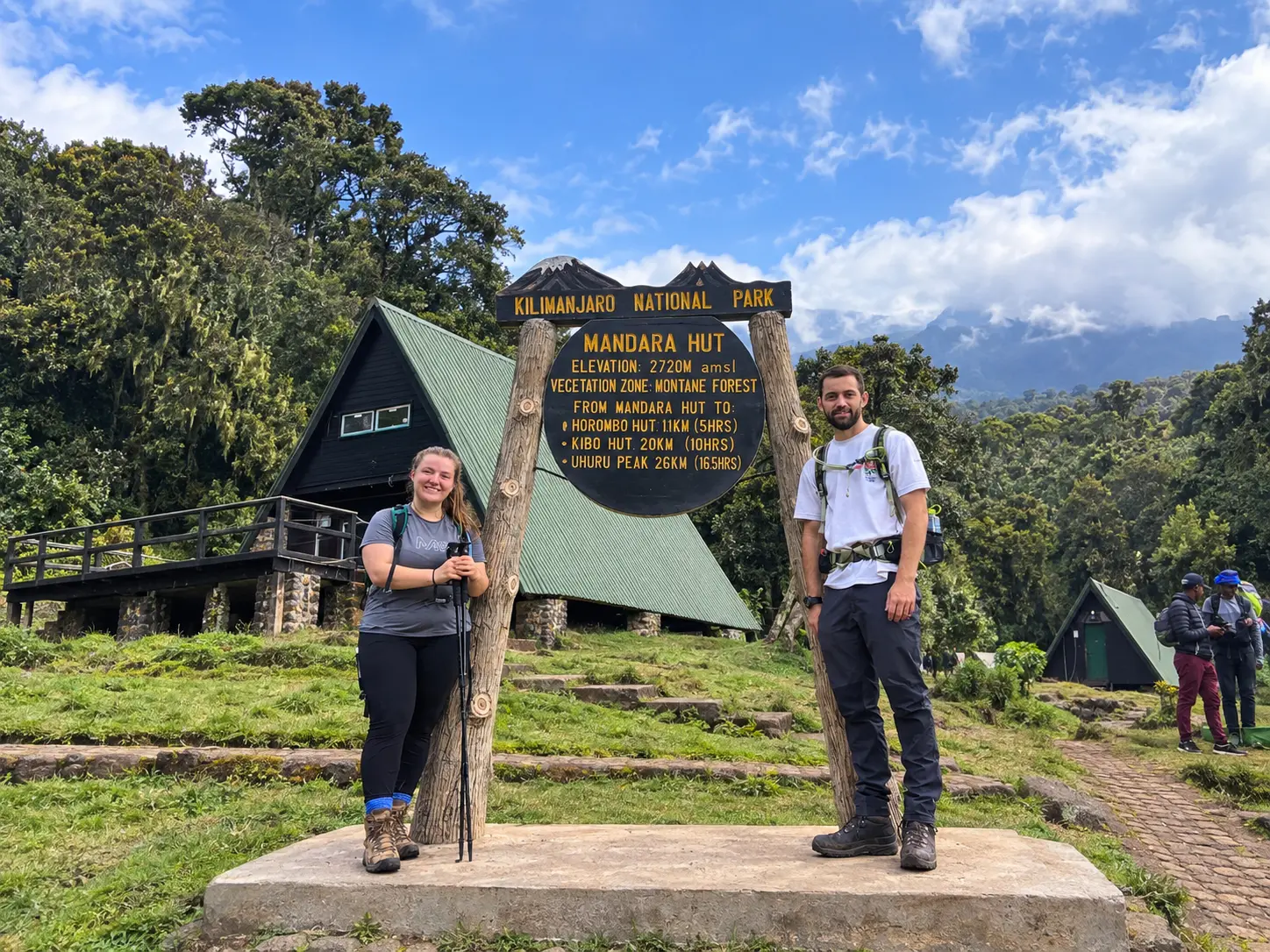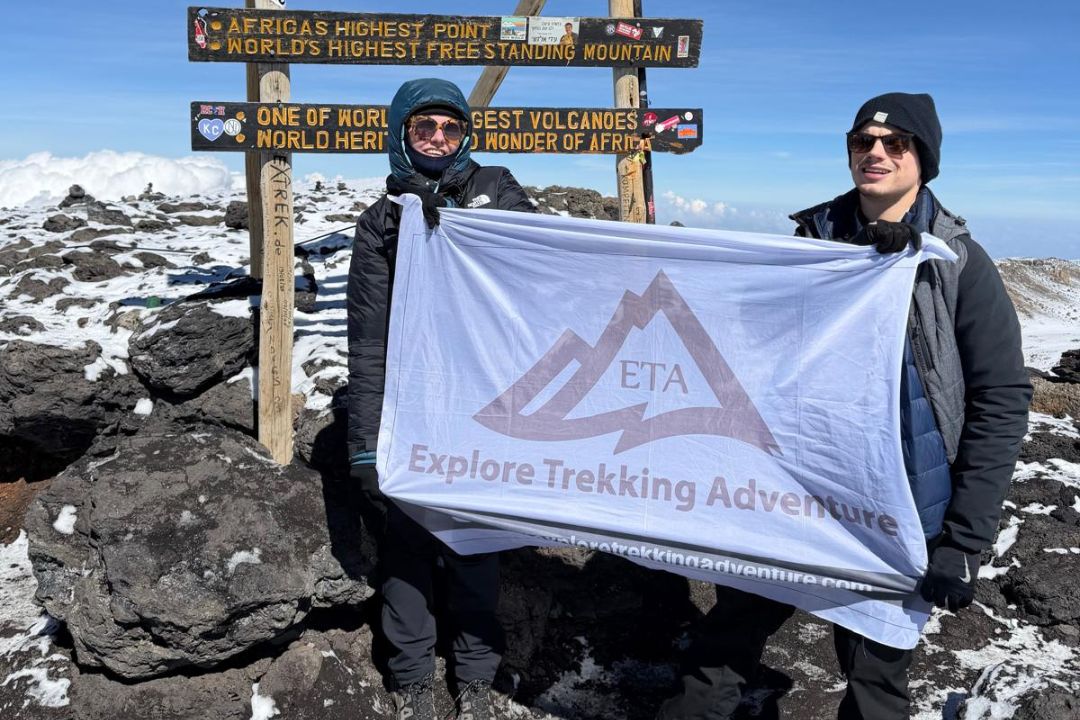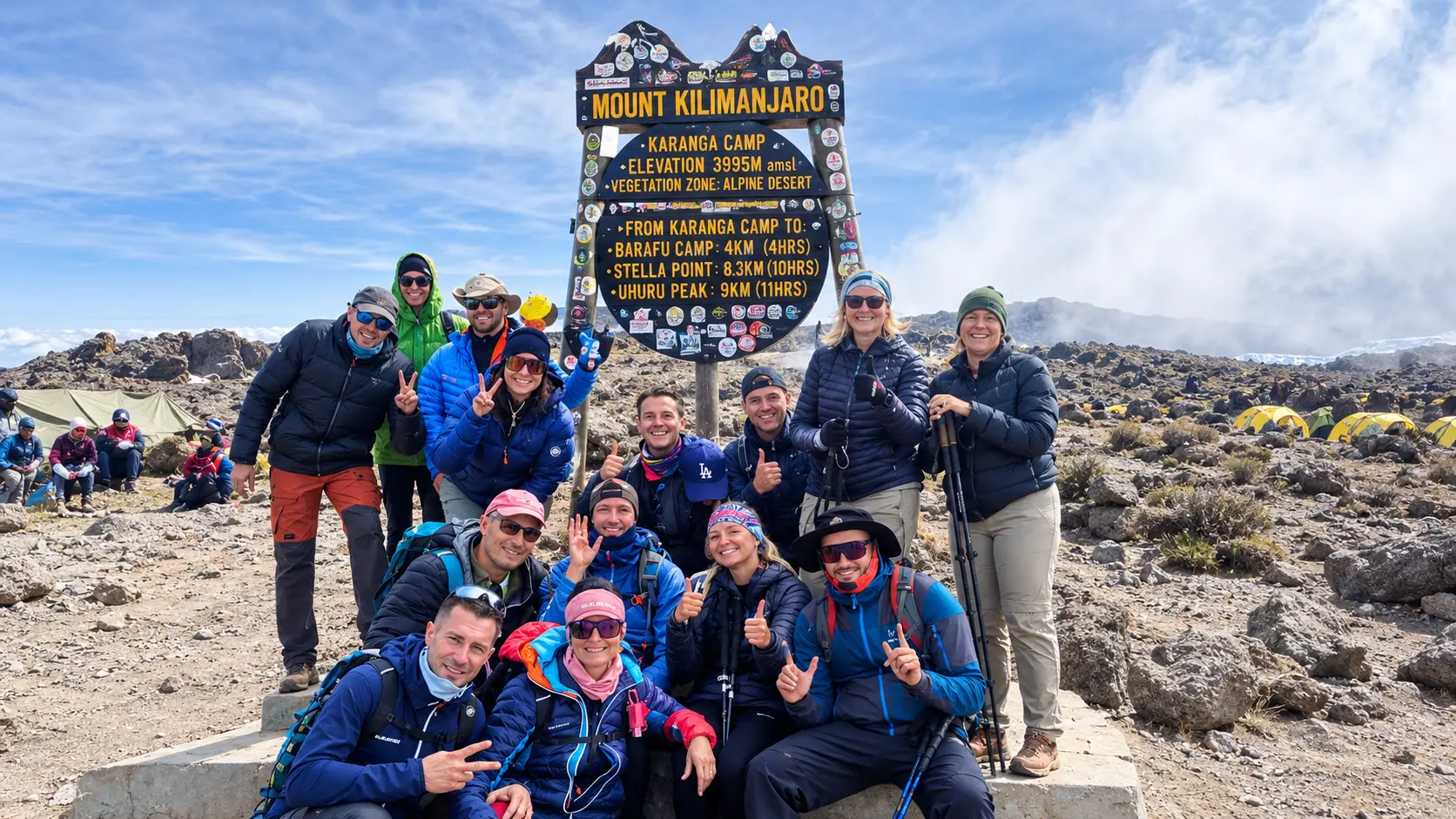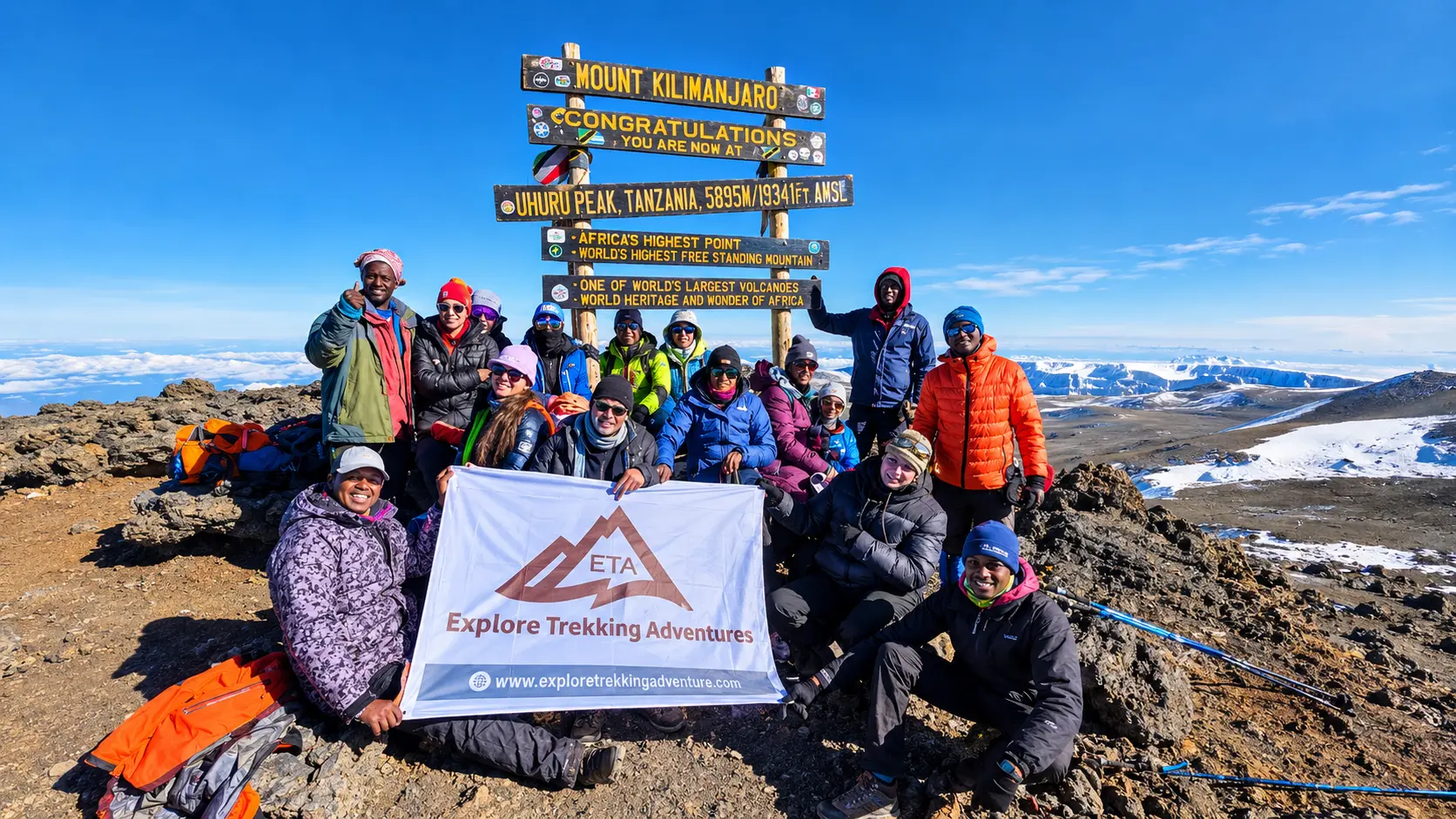
Climbing Kilimanjaro means walking through five climate zones in a single week: from warm farmland and rainforest to a frozen summit at 5,895 meters. The right equipment is what turns a hard climb into a comfortable and safe one. This guide explains what we provide on the mountain, what you need to bring, and the optional extras you can add to your climb.
What We Provide on the Mountain
Every Explore Trekking Adventure climb includes the essentials that keep you safe, fed and rested:
- Sleeping tents, and a dining tent with table and chairs
- A foam sleeping mattress (2 inches thick) for every climber
- A first aid kit and an oxygen tank for emergencies
- Three meals a day, a morning call before wake-up, ginger tea for summit day and hot water for washing
- A full crew: guides, cooks and porters who carry the camp equipment
What You Need to Bring: The Layering System
Cotton must never be worn on Kilimanjaro—it absorbs moisture and holds the cold. Use polyester, nylon and merino wool, and build your clothing in layers so you can adjust to each climate zone.
- Base layer: Moisture-wicking thermal tops and bottoms in merino wool or synthetic fabric, 2–3 pairs
- Mid-layer: A lightweight fleece jacket or pullover (1–2) for insulation
- Insulated layer: A heavy down jacket rated to -15°C / 0°F, with a hood
- Outer shell: Waterproof, windproof jacket and trousers (Gore-Tex or similar)
- Trekking clothes: 2–3 pairs of lightweight convertible trousers and 4–5 moisture-wicking shirts
- Footwear: Waterproof hiking boots with ankle support
- Hands and head: Sub-zero ski gloves, fleece liner gloves, a warm beanie, a sun hat and a neck buff
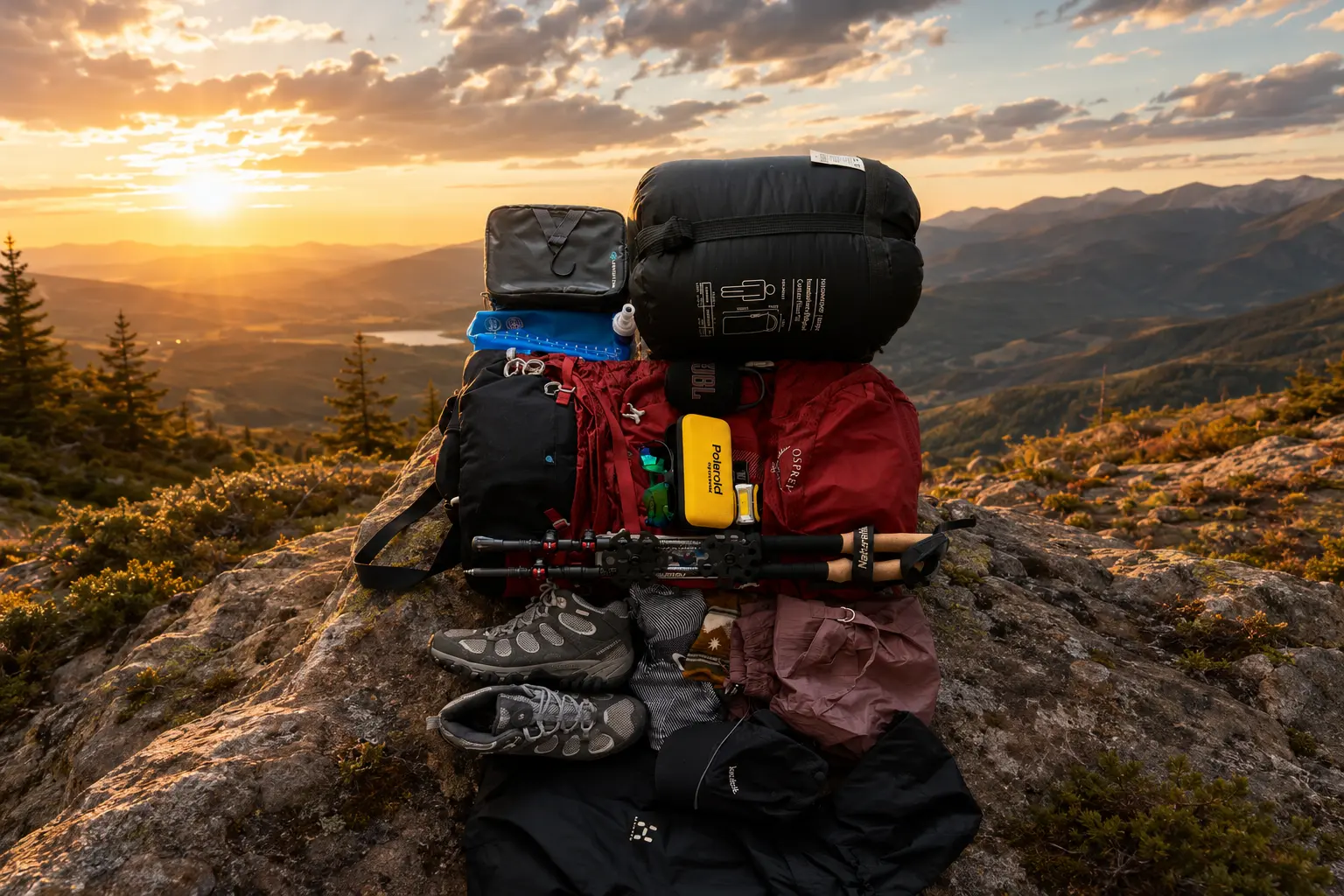
- Sleeping bag: A four-season bag rated -15°C to -20°C (0°F to -4°F)
Luggage: What to Pack It In
- Porter duffel bag: 80–120 liters, waterproof, and strictly no more than 15 kg / 33 lbs
- Daypack: 30–40 liters with a rain cover, for your daily layers, snacks, camera and water
- Trekking poles: Adjustable, with rubber tips, in aluminum (durable) or carbon fiber (light)
- Water system: About 4 liters: a 3-liter hydration bladder plus a 1-liter bottle, with an insulated sleeve for summit night
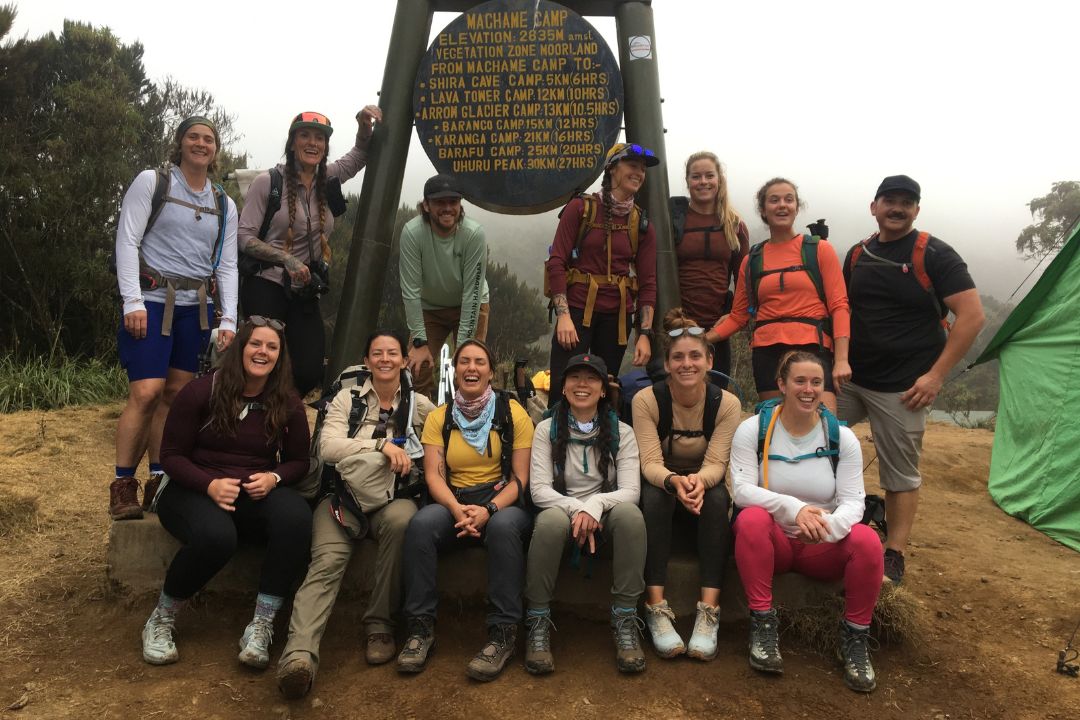
Small Items That Make a Big Difference
- A headlamp with spare batteries for summit night
- Sunglasses with UV protection, sunscreen and lip balm
- Warm socks, and a spare pair for summit night
- Personal medication and a small personal first aid kit
- A power bank for your phone and camera
Optional Gear Add-ons
You can add comfort to your climb when you book. All equipment is subject to availability, so early booking is recommended.
- Private toilet: $150 per trip
- Private tent: $5 per day
- Kailas X3 III Alpine Tent with vestibule: $10 per day
- Thicker sleeping mattress (4-inch foam): $10 per mattress
- Therm-a-Rest sleeping pad: $15 per pad
Our packages include a 2-inch foam mattress by default. If you prefer a thicker one, you can choose the 4-inch mattress for the extra cost above.