For questions or booking inquiries, call +255 713 928 045 or contact us.
Rising majestically to 5,895 meters (19,341 feet) above sea level, Mount Kilimanjaro is the highest free-standing mountain in the world and is famously known as the Roof of Africa. Moreover, located in Tanzania, this iconic peak is one of the most sought-after trekking destinations on the continent. In fact, it continues to attract climbers from all corners of the globe due to its accessibility and breathtaking beauty.
At Explore Trekking Adventure (ETA), we specialize in Climbing Mount Kilimanjaro; therefore, we offer unforgettable journeys to the summit for adventure lovers from all walks of life. Additionally, with over 11 years of experience and more than 20,000 successful climbers, we’re proud to be one of the trusted names in Kilimanjaro trekking. Consequently, our guests enjoy safe, guided experiences that maximize their chances of reaching the summit.
Each year, over 40,000 adventurers set their sights on Climbing Mount Kilimanjaro, drawn not only by its natural beauty and diverse landscapes but also by the achievement of standing on Africa’s highest point. Likewise, many climbers appreciate that reaching the summit doesn’t require technical mountaineering skills. Instead, a good level of physical fitness, the right preparation, and a professional guiding team are all you need. As a result, Mount Kilimanjaro has become a bucket-list destination for both beginners and seasoned trekkers.
Furthermore, we’ve created this comprehensive guide to help you prepare for your once-in-a-lifetime Mount Kilimanjaro climb. Our insights are based on years of hands-on experience and a deep understanding of what it takes to successfully and safely reach Uhuru Peak. Indeed, proper planning and reliable support are key components of a successful ascent.
Ultimately, whether you’re a first-time trekker or an experienced adventurer, Climbing Mount Kilimanjaro with ETA promises a journey filled with challenge, inspiration, and stunning views that will stay with you forever. Nevertheless, with the right mindset and preparation, your Kilimanjaro dream can become a remarkable reality.
What People Say on Tripadvisor
Our Clients Testimonials
Posted onVerified Une superbe aventure à découvrir ! Ascension génial avec une équipe au top !!!Posted onVerified Kilimandjaro 2026 Merci à Martin et son équipe ! Nous avons vécu une énorme semaine. Tout était parfait 👍 disponibilité, gentillesse, professionnalisme, humilité et joie de vivre. Un grand moment de bonheur Merci la family À bientôt. 👋 I Hope 😘😘Posted onVerified An Unforgettable Adventure on Kilimanjaro What can I say other than THANK YOU… An absolutely magical experience, forever etched in my memory! Climbing Kilimanjaro exceeded all my expectations. Martin handled the entire organization from A to Z with perfect mastery, everything was smooth, reassuring, and flawlessly managed. You feel supported from the very first moment. A huge thank you to my guide, Georges an exceptional person: caring, attentive, and incredibly motivating. He looks after everyone throughout the trek with professionalism and genuine kindness. Thanks to him, every challenge feels easier and every step feels achievable. And what can I say about the porters, the true heroes of the mountain! Always smiling, unbelievably kind, and deeply inspiring. Their energy and positive spirit brighten each and every day. Those five days together will remain unforgettable: the shared meals in the tent, the warm and joyful moments, the sense of connection in such an extraordinary setting. Truly special memories. The landscapes are simply breathtaking. Every sunrise, every panorama, every step reminds you how unique and powerful this adventure is. An extraordinary human and physical experience that I would recommend without hesitation. Thank you again to the whole team for these priceless memories!Posted onVerified Cannot Say Enough about ETA!!! I truly cannot say enough good things about Explore Trekking Adventures and Martin’s entire team. From start to finish, this was one of the most incredible and a life-changing experience. Climbing Kilimanjaro is no small undertaking, and the professionalism, knowledge, and preparation of this team were evident every single day. They were extraordinarily organized, safety-focused, and deeply experienced. I always felt supported and confident in their guidance. Their expertise on the mountain — from pacing and acclimatization to encouragement on summit night — made all the difference. Beyond their skill and professionalism, what truly sets this company apart is the people. The entire team was patient, kind, and unbelievably fun. They created an atmosphere of camaraderie and positivity that carried us through every challenge. There was constant encouragement, laughter, and genuine care. They were invested in our success and well-being in a way that went far beyond expectations. Martin leads an exceptional group. His integrity, leadership, and attention to detail are reflected in every member of the crew. You can tell this is not just a business...it’s something they deeply believe in. Whether you are planning to climb Kilimanjaro or go on safari in Tanzania, I would recommend Explore Trekking Adventures without hesitation. They will always be my go-to team in Tanzania. Five stars are not enough.Posted onVerified January Mt. Kilimanjaro Trek via Machame Route I had an amazing experience with Explore Trekking Adventures on a climb of Mt. Kilimanjaro. Their team was nothing but amazing, from working out last minute travel logistics to caring for us on the mountain. Martin and his team are truly an exceptional group. I will absolutely be coming back to book one of their safari trips!Posted onVerified Une Equipe exceptionnelle pour une grande Expérience avec Explore Trekking Adventure Avec Martin aux commandes d'Explore Trekking Adventure, il s'agit d'une excellente option pour réaliser l'ascension du Kilimandjaro et tout autres activités en Tanzanie. Nous avons pu, par la voie Umbwe, rejoindre le sommet du Kili en 6 jours ; chaque jours aura été remarquable grâce à un accompagnement exceptionnel : porteurs, chef de cuisine, serveur, guides diplômés ... C'était une aventure humaine avec une équipe rigoureuse et expérimentée dont le seul objectif et de vous faire vivre une belle expérience coaching, suivi santé, .... La force de Martin, à travers son parcours dans l'éducation autour du tourisme en Tanzanie est sa capacité à recruter les bonnes personnes pour constituer une Grande Equipe qui mettra tout en oeuvre pour vous permettre de réaliser votre rêve, en couple, en famille ou avec des amis, dans une ambiance de qualité, loin des expéditions rythmés par le marketing. One team, One Dream ! Un petit conseil : ne préparez pas votre ascension du Kilimandjaro sans prendre contact avec Martin, Explore Trekking Adventure. Bonne préparation et belle aventure !!Posted onVerified Amazing, humbling adventure I cannot say enough positive things about this trip. I never anticipated the depth of emotion I experienced during it, continue to feel upon my return, and will likely carry with me for years to come. To imagine such a rich and meaningful collection of experiences compressed into so few days is truly remarkable. The care, confidence, compassion, and competence of Martin and the ETA team were unmatched and absolutely vital to the success of our journey. This was a rare treasure of mind-expanding, challenging, joyful, interesting, and deeply humbling experiences—one I will forever be grateful for. Asante sana, Babu Simba.Posted onVerified Life changing This adventure was truly life-changing. Martin and the ETA team have a rare gift for blending exceptional skill and safety with genuine heart. I owe every bit of my success to their encouragement, attention to comfort, constant presence, and joyful personalities. Their singing and dancing carried us through even the hardest moments. Reaching the peak was unforgettable, but it cannot compare to the love and sense of safety I felt from those who quite literally carried me there. I will hold this experience with me forever.Posted onVerified Telling Everyone I Know about ETA One of the most fulfilling experiences of my life. Martin and his team were excellent, and I could not have successfully made it up the mountain without them (looking at you, Fred!). They provided not only support, but also delicious meals, safe lodging, and good vibes. Hakuna Matata.Posted onVerified A true gem in a touring company! I am very grateful to be able to join Martin and his team (Explore Trekking Adventures) now 2 years in a row! Their incredible team guided me and a group of medical professionals to a successful summit of Mt. Kilimanjaro on a medical education expedition. From start to finish, their level of safety, expertise, and thoughtful attention to detail was truly exceptional. As an ER physician, safety and preparation were paramount for our group. ETA's understanding of altitude physiology, acclimatization and route knowledge was impressive. They made sure to meticulously tracked each individual’s progress throughout the climb, adjusting pacing, rest and support to ensure that every member of our group had the best possible chance for a safe and successful summit. Martin and his team tailored this experience to our group. They are thoughtful, adaptive, and genuinely invested in their climbers’ well-being. For example, at altitude, many of our appetites understandably declined, and the team went to extraordinary lengths to make sure we were still properly nourished. One evening, they overheard us joking about craving pizza. To our absolute amazement, later that night our cook had prepared fresh pizza at altitude. They even made an impromptu cake when they discovered it was one of our members’ B day! That moment perfectly captured the heart of this group. The guides, cooks and every porter were outstanding. Their kindness, strength and pride in their work were evident every day. They functioned as a seamless team lifting us up both literally and figuratively. It is impossible to overstate how much their energy and encouragement contributed to our success. ETA gave us the preparation, confidence, and strength to make this climb a success. I trust them completely and feel so lucky to be able to work with this team. I will follow ETA to the ends of the earth and back!!Tripadvisor rating score: 5.0 of 5, based on 58 reviews,showing our latest reviews
Climbing Kilimanjaro typically takes a minimum of 5 days; however, for a safer and more successful summit attempt, most climbers choose routes that last 6 to 8 days. This is because longer itineraries allow your body more time to acclimatize to the high altitude, thereby greatly increasing your chances of reaching Uhuru Peak. In addition, slower routes help minimize the risk of altitude sickness, which is one of the most common reasons climbers fail to summit.
Moreover, for those who prefer a more immersive and less rushed adventure, extended Kilimanjaro itineraries—including options with an overnight stay inside the crater—can take 10 days or more. As a result, climbers not only improve their success rate but also enjoy the mountain’s changing landscapes more deeply. Furthermore, these longer routes allow trekkers to recover better between camps, making the journey more comfortable and enjoyable.
Ultimately, the more days you spend on Mount Kilimanjaro, the higher your chances of successfully reaching the summit.
Climbing Mount Kilimanjaro is considered a moderate trek, which means it is accessible to people with average fitness levels. In fact, you don’t need technical climbing experience or advanced mountaineering skills to reach the top. Instead, the primary challenge comes from the effects of altitude, combined with long trekking hours.
Therefore, choosing a reputable tour operator, allowing enough time for acclimatization, and maintaining a slow, steady pace significantly increase your chances of success. Additionally, preparing physically through regular hikes and cardio training greatly enhances your comfort and stamina on the mountain.
Furthermore, proper gear, good hydration, and mental determination play a crucial role in ensuring a smooth and rewarding ascent. Likewise, trekking with an experienced guiding team ensures you receive the support and safety monitoring required at higher elevations.
Ultimately, with the right preparation, guidance, and mindset, most people can successfully conquer Africa’s highest mountain. Nevertheless, respecting the altitude and following your guide’s instructions remain essential for a safe and enjoyable Kilimanjaro climb.
Highest Free-Standing Mountain
Mount Kilimanjaro is the tallest free-standing mountain on Earth, standing at 5,895 meters (19,341 feet). It dominates the African landscape and offers one of the world’s greatest trekking adventures.
No Technical Skills Required
Climbing Kilimanjaro doesn’t involve ropes, ice axes, or mountaineering skills. It’s a high-altitude trek suitable for beginners with good fitness and determination, especially on the longer acclimatization routes.
Seven Main Routes to the Summit
There are seven established trekking routes on Kilimanjaro. Machame, Lemosho, and Rongai are among the most popular, each offering unique scenery and varying degrees of difficulty and success rates.
One of the Seven Summits
Mount Kilimanjaro is one of the Seven Summits, the highest mountains on each continent. Its iconic status and breathtaking landscapes make it one of the natural wonders of the world.
Summit is Called Uhuru Peak
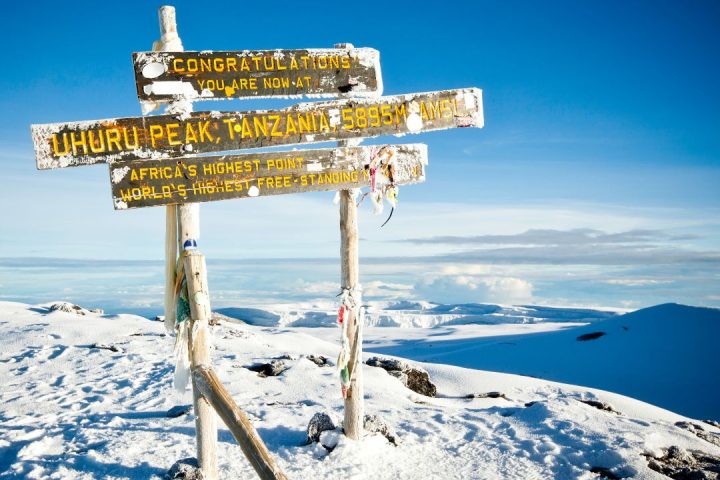
The highest point of Mount Kilimanjaro is called Uhuru Peak. Located on Kibo, one of Kilimanjaro’s three volcanic cones, it offers breathtaking sunrise views above the clouds of Africa. Uhuru means "Freedom"
Success Depends on Acclimatization
The key to successfully Climbing Kilimanjaro is proper acclimatization. Choosing longer routes helps your body adjust to altitude, reducing the risk of altitude sickness and increasing your summit chances.
Diverse Climate Zones
All climbs take place within Kilimanjaro National Park, a UNESCO World Heritage Site. Park fees support conservation efforts and local communities, making every climb contribute to protecting this natural treasure.
Climbing Kilimanjaro Supports Conservation
The key to successfully Climbing Kilimanjaro is proper acclimatization. Choosing longer routes helps your body adjust to altitude, reducing the risk of altitude sickness and increasing your summit chances.
5-10 days
Kilimanjaro Hike Lengths
$2,900
Average Climb Cost
98%
Kilimanjaro Success Rate
At Explore Trekking Adventure (ETA), we believe that Climbing Kilimanjaro is a journey that should match your pace, goals, and travel style. Therefore, we offer a variety of Mount Kilimanjaro itineraries—each carefully crafted to suit different experience levels, timeframes, and personal preferences.
Ideal for fit trekkers with limited time, our 6-day itineraries like the Marangu or Machame Route offer a fast-paced ascent with scenic rewards. In addition, they are perfect for those looking to challenge themselves.
For a safer and more enjoyable Kilimanjaro climb, we recommend 7 or 8-day itineraries like the Lemosho or Machame Route. These routes, in fact, provide excellent acclimatization and therefore the best chance of reaching the summit.
Looking for a deeper connection with the mountain? Then our extended treks, such as the Northern Circuit or crater overnight options, offer remote trails, fewer crowds, and a truly immersive experience.
Want something unique? As a result, we design custom Kilimanjaro itineraries for solo adventurers, couples, families, and groups—tailored to your schedule, fitness level, and personal preferences.
Per Person
Per Person
Per Person
Per Person
Per Person
Per Person
Per Person
Per Person
Per Person
Per Person

Per Person
Per Person
What to Pack for Kilimanjaro?
Climbing Kilimanjaro requires gear for varying weather across five climate zones. Therefore, pack moisture-wicking layers, insulated jackets, waterproof outerwear, quality boots, gloves, hat, sleeping bag, and trekking poles. Since weather shifts fast, be ready for sun, wind, or snow.
Additionally, download our expert-approved Kilimanjaro packing list to prepare confidently.
Can a Beginner Climb Kilimanjaro?
Yes! Climbing Kilimanjaro is achievable for beginners with average fitness. In fact, no technical climbing skills are needed—just determination, the right gear, and a slow, steady pace. Moreover, choosing a longer route for better acclimatization greatly increases your chances of reaching the summit safely and successfully.
When Is the Best Time to Climb Kilimanjaro?
The best time for Climbing Kilimanjaro is during the dry seasons: January to March and June to October. During these months, you’ll enjoy clearer skies, less rain, and safer trails, which increases your chances of a successful summit. Conversely, avoid April, May, and November due to heavy rainfall and slippery conditions.
How Much Does It Cost to Climb Kilimanjaro?
As of 2025, a safe and comfortable 7-day Kilimanjaro group climb typically costs around $2,900. Meanwhile, shorter 5–6 day treks or low-season trips range between $2,300–$2,500. Importantly, these prices include essential expenses like park fees, which account for roughly 35% of the total cost.
However, be cautious of unusually low prices—these often reflect poor porter treatment and compromised safety standards. Therefore, ethical trekking ensures fair wages, proper meals, and support for the hardworking mountain crew.
How Should I Train for the Climb?
To prepare for Climbing Kilimanjaro, first, build a moderate fitness level with a focus on endurance. For example, you should comfortably run 5 km (3 mi) and hike 10 km (6+ mi) in a day. Additionally, ideal training includes hiking with a backpack, cycling, running, and swimming to help improve stamina and lung capacity.
What Are the Dangers of Climbing Kilimanjaro?
The main danger when Climbing Kilimanjaro is acute mountain sickness (AMS), caused by rapid altitude gain. In rare cases, it can progress to pulmonary or cerebral edema, both potentially fatal. On average, around 10 climbers die each year, often due to poor acclimatization.
The good news is that AMS is preventable. For instance, opt for a 7-day+ itinerary, hike slowly, stay well-hydrated, and choose a reputable operator. Furthermore, ensure your guides are Wilderness First Responder (WFR) certified for expert care and safe evacuations.
Expert Opinion
At Explore Trekking Adventure (ETA), we know that Climbing Kilimanjaro is achievable for beginners—no technical skills required, just good fitness and determination.
But don’t underestimate the mountain. At 5,895 m (19,341 ft), poor acclimatization can lead to serious altitude sickness. Many incidents occur due to cheap operators using poor gear and unqualified guides.
At ETA, your safety comes first—with Wilderness First Responder–certified guides, quality equipment, and well-paced routes to help you summit safely and confidently.

Martin
E.T.A
Kilimanjaro Expert | Tanzania
Here is What People Say on Google
Our Clients Testimonials
Posted onTrustindex verifies that the original source of the review is Google. It is with great enthusiasm to review Martin and his team on this incredible trekking adventure to climb Mt. Kilimanjaro. We went with a group of 4, all of us with varied experiences. ETA created a community in our group, seamlessly combining the thrill of exploration with the warmth of human connection. We kept saying how there were no words could describe our experience, but it was nothing short of extraordinary. We could only imagine the number of moving parts and details that occurred behind the scenes to make this adventure possible. Martin and his team were incredibly professional and well-prepared. If we felt tired, all we had to do was look to our guides and porters (who carried 3x as much as us) and were motivated to push through. Watching our guides and porters’ transverse the rugged terrain with such grace spoke highly to their exceptional physical skill and grit. Our guides got to know us over the week before summiting. They observed how we hiked, what motivated us, our strengths and weaknesses and expertly prepared us for the big night. We were able to summit at sunrise, one of the top experiences in my life. All of us left this adventure feeling accomplished and invigorated. We will be forever grateful to ETA for helping create this experience. Thank you, Martin, Tammy, Raymond, Mama, Babu Steve, Salvatory, Obedi, Erick, Evans, Yusuph, Pastory, Hassan, James, Lameck, Kasinge, Noeli, Ezekiel, Jaison, Philemon.Posted onTrustindex verifies that the original source of the review is Google. Une expérience inoubliable passée auprès de Martin le guide et de son équipe qui a été extraordinaire avec nous. Une équipe très motivée et aux petits soins pour nous permettre de gravir le Kilimandjaro dans les meilleures conditions possible. Martin est une personne formidable qui a su nous transmettre son optimisme et sa motivation. Hakuna matata était le slogan de notre ascension.Posted onTrustindex verifies that the original source of the review is Google. J'ai vécu l'une des plus belles aventures de ma vie grâce à Explore Trekking Adventure ! Une organisation irréprochable et une équipe au top ! Ensemble, nous avons gravi le Kilimandjaro, une expérience absolument magique. Nous avons ensuite prolongé l'aventure avec un safari de 3 jours, tout aussi inoubliable. Chaque moment était parfaitement orchestré. Je recommande Explore Trekking Adventure à 100% !Posted onTrustindex verifies that the original source of the review is Google. We had an excellent experience both on Kilimanjaro and Safari. Our Mountain Guide Agusto and the whole team offered an outstanding service while guiding us safely on top of the mountain. Choosing the Lemosho route was a good choice because there were less people and the camps were very clean. Afterwards we were picked up by our safari guide Yusuph who was a real expert and shared his knowledge with us. We really enjoyed our trip through Tarangire and Ngorongoro. Thanks for the good memories we will keep in mind!Posted onTrustindex verifies that the original source of the review is Google. We had an amazing experience with Explore Trekking Adventure on our once in a lifetime adventure. From day one of planning to saying goodbye, we had an amazing time. Explore Trekking Adventure planned the whole journey and were very accommodating to last minute requests. We did the safari in Tarangire national park, Serengeti and Ngorongoro. We also went to Pangani and went to Dar Es Salam. We did not have to do anything, they took care of us. We just had to show up. Drivers were amazing, my dad hit it off with Evans. Safiri on the town leg was great too! The hotels they chose were amazing and clean. Food was amazing as well. I can’t thank them enough as my dad got to see his birth place.Posted onTrustindex verifies that the original source of the review is Google. Active toursPosted onTrustindex verifies that the original source of the review is Google. Highly recommend Explore Trekking Adventure for both the Kilimanjaro hike and safari! We did the 7 day Machame hike and our lead guide, Alex was beyond amazing. Assistant guide Elisha and Kundael, were also incredible. The crew was very attentive to all of your needs and took care of each and everyone of us the whole time. Thanks to those three, John and Jackson, we were all able to summit and have great memories as well. For our 3 days safari we had Simon. He did an incredible job at making sure we saw as many animals in the few days we had. He was very knowledgeable on the animals and answered any questions we had. Thanks to him we were able to see the big 5 in 2 days! 100% recommend Explore Trekking Adventure and the people who lead both of our adventures over and over again! They had everything so organized for us and did everything they said they would do. This was a trip of a lifetimePosted onTrustindex verifies that the original source of the review is Google. I just traveled with Explore Trekking Adventure after Corona, this has been a great experience and can be highly recommended. We had the guide Simon with us on Safari, he was a super guide and knew a lot about the animals and where the different ones are usually.Posted onTrustindex verifies that the original source of the review is Google. From rainforest to snow-capped peak, each day on Kili was filled with stunning views and incredible experiences. My friend and I made the trek in 6 days on the Machame route and then also did a spectacular 3-day safari all with Explore Trekking Adventure. ETA was super communicative and helpful in the lead up to the trip and took care of all logistics from the moment we landed at JRO until our departure. Their packing list was spot on and all equipment they provided was in great condition. The food was delicious too! Best of all, their guides were extremely knowledgeable, friendly, and patient, and the full Explore Trekking adventure team made the trip an awesome experience all around.Google rating score: 5.0 of 5, based on 9 reviews
What Does Kilimanjaro Mean?
The name “Kilimanjaro” likely comes from a mix of Swahili and Chaga languages. Although its exact origin is debated, common interpretations include “shining mountain” or “mountain of greatness.” These meanings, therefore, reflect the mountain’s majestic presence and the deep cultural significance it holds in East African history.
Martin
Online
Interested in climbing Mount Kilimanjaro?
When Will Kilimanjaro’s Glaciers Disappear?
Kilimanjaro’s glaciers, once vast and striking, have been rapidly shrinking over the past century. In fact, experts estimate that over 85% of the ice cover has vanished since the early 1900s. Moreover, current scientific projections suggest that, if the trend continues, the remaining glaciers could disappear entirely by 2033 to 2040, depending on climate patterns and environmental changes.
This loss, however, isn’t just a visual transformation—it’s a warning sign. Indeed, the melting glaciers of Mount Kilimanjaro are symbolic of the broader impacts of climate change. While climbers still have the chance to witness these icy remnants today, future generations may only know Kilimanjaro as the “Roof of Africa” without its legendary crown of ice.


Who Was the First Person to Climb Mount Kilimanjaro?
The first recorded successful ascent of Mount Kilimanjaro was made by Hans Meyer, a German geographer, and Ludwig Purtscheller, an Austrian mountaineer, on October 6, 1889. They were accompanied by a local guide named Yohani Kinyala Lauwo, from the Chaga tribe.
This historic achievement, therefore, marked a significant moment in mountaineering, overcoming extreme altitude and unpredictable weather with limited equipment. Even today, their route still inspires thousands who dream of Climbing Kilimanjaro and reaching the summit of Africa’s highest peak.
Where Is Mount Kilimanjaro Located?
Mount Kilimanjaro is located in northeastern Tanzania, near the border with Kenya. Specifically, it lies within Kilimanjaro National Park, a UNESCO World Heritage Site, and is about 5 hours by road from Arusha and 1 hour from Kilimanjaro International Airport (JRO).
As Africa’s tallest mountain, Kilimanjaro rises majestically above the surrounding plains and, therefore, is a defining landmark of the region—making it one of the most iconic destinations for those Climbing Kilimanjaro.
How Do I Get to Mount Kilimanjaro?
To begin your Climbing Kilimanjaro adventure, the best option is to fly into Kilimanjaro International Airport (JRO), located between Arusha and Moshi—the two main gateway towns to the mountain. Additionally, many international airlines offer connections via Amsterdam, Doha, Istanbul, Nairobi, or Addis Ababa.
From there, it’s a short 45-minute drive to Moshi or about 1.5 hours to Arusha, where most climbers stay before starting their trek. Furthermore, your tour operator—like Explore Trekking Adventure (ETA)—will typically arrange all transfers, making your journey to Kilimanjaro smooth and stress-free.
How Tall Is Mount Kilimanjaro?
Mount Kilimanjaro stands at an impressive 5,895 meters (19,341 feet) above sea level, which makes it the tallest mountain in Africa and, consequently, the world’s highest free-standing mountain. Moreover, its iconic snow-capped summit, Uhuru Peak, is the ultimate goal for those Climbing Kilimanjaro.
Why Is the Summit of Kilimanjaro Called Uhuru Peak?
The summit of Mount Kilimanjaro is called Uhuru Peak, with “Uhuru” meaning “freedom” in Swahili. In fact, it was named in 1961 to commemorate Tanganyika’s independence (now part of Tanzania) from British colonial rule.
Moreover, the name symbolizes not just political freedom, but also the personal triumph and liberation climbers feel when reaching the highest point in Africa. Therefore, today, Uhuru Peak remains a powerful symbol of achievement for those Climbing Kilimanjaro.
Martin
Online
Interested in climbing Mount Kilimanjaro?
When Are the Rainy and Dry Seasons in Tanzania?
Tanzania experiences two main rainy seasons: the long rains from March to May, and the short rains from late October to early December. During these periods, trails on Mount Kilimanjaro can become muddy and slippery, which makes treks more challenging.
Conversely, the dry seasons run from June to October and mid-December to February. Therefore, these are the best times for Climbing Kilimanjaro, offering clearer skies, better trail conditions, and a higher chance of reaching the summit successfully.
When Are the Rainy and Dry Seasons in Tanzania?
Tanzania experiences two main rainy seasons: the long rains from March to May, and the short rains from late October to early December. During these periods, trails on Mount Kilimanjaro can become muddy and slippery, which makes treks more challenging.
Conversely, the dry seasons run from June to October and mid-December to February. Therefore, these are the best times for Climbing Kilimanjaro, offering clearer skies, better trail conditions, and a higher chance of reaching the summit successfully.
Absolutely — insurance is a must-have when Climbing Kilimanjaro. Since the mountain reaches 5,895 meters, the risk of high-altitude sickness, injury, or emergency evacuation should never be underestimated. Therefore, a standard travel policy is not enough; you need specialized adventure or mountaineering insurance that covers high-altitude trekking (up to 6,000m), emergency medical evacuation, trip interruption or cancellation, and loss of baggage or gear.
For example, we strongly recommend using trusted providers such as Global Rescue, known for offering comprehensive evacuation and rescue services. Because Kilimanjaro is located in a remote part of Tanzania, rescue logistics can be complicated and costly — however, Global Rescue ensures you’re covered with real-time 24/7 assistance and helicopter evacuation if needed.
Finally, always make sure your insurance policy includes altitude coverage and high-risk activity clauses specifically for trekking Kilimanjaro. In this way, being properly insured gives you peace of mind and ensures quick, expert help in case of an emergency.
Proper acclimatization is the key to a safe and successful summit of Kilimanjaro. Indeed, the primary cause of failed summit attempts and medical issues is acute mountain sickness (AMS), triggered by rapid altitude gain. To minimize this risk, ETA recommends choosing a minimum 7-day itinerary or longer. For instance, popular routes like Lemosho, Machame, and Northern Circuit are specifically designed for gradual ascent and, therefore, improved acclimatization.
The golden rules of altitude trekking are simple but effective:
Furthermore, all ETA climbs include daily health checks with pulse oximeters, and our guides are trained in recognizing AMS symptoms early. With proper planning, acclimatization is manageable for most trekkers, even beginners.
Yes, but with an important note. Climbing Kilimanjaro doesn’t usually require supplemental oxygen, since it is a non-technical trek with manageable altitude for most. However, portable oxygen systems are carried by professional operators like ETA as a precautionary emergency measure — not for routine use. Specifically, oxygen is used only when climbers develop severe altitude-related symptoms that require stabilization before evacuation.
Furthermore, what’s far more effective than relying on oxygen is ensuring proper route choice, pace, and support. ETA guides are all Wilderness First Responder (WFR) certified, trained in high-altitude first aid, and carry pulse oximeters, first-aid kits, as well as emergency communication devices.
Therefore, knowing that oxygen is available and guides are trained in medical response gives peace of mind — yet prevention through smart acclimatization remains the best approach.
Tipping on Kilimanjaro is both customary and important. The men and women who carry your gear, prepare your meals, pitch your tents, and guide you to the summit work incredibly hard in tough conditions. Therefore, fair tips show appreciation for their efforts and help support their families.
Here’s a general recommended tipping guide (per day, per crew member):
For example, for a 7-day climb, expect total tips of $250–350 per climber, depending on the group size and crew composition. Tips are usually collected at the end of the climb and presented at the farewell ceremony, often in a fun and respectful group setting.
Moreover, ETA is a proud supporter of fair porter treatment. We work only with porter welfare organizations like KPAP (Kilimanjaro Porters Assistance Project), therefore ensuring our crews are well-paid, well-fed, and provided proper gear and shelter.
When planning your Kilimanjaro climb, it’s important to account for the daily park fees, as they are essential for maintaining the mountain and supporting your journey. Currently, the park fee averages around $154 per day, per climber — and it’s made up of several key components:
At Explore Trekking Adventure (ETA), we’ve made things simple — all park-related charges are already built into your package. Therefore, you won’t need to pay anything extra or worry about these logistics. Instead, we handle everything behind the scenes, so your focus stays on what matters: the incredible journey to the Roof of Africa.
Tulivu Kilimanjaro Retreat is a charming boutique hotel and eco-retreat located just a few kilometers
Panama Garden Resort is a tranquil 3.5-star hotel nestled in the Shanty Town area of
Kilimanjaro Wonders Hotel is a stylish, four-star boutique hotel centrally located in Moshi, just a

Explore Trekking Adventure (ETA) offers expertly guided treks, authentic cultural experiences, and responsible travel. With local knowledge, quality gear, and personalized service, ETA ensures safe, unforgettable journeys across East Africa.


 Nederlands
 Español
 Русский
 Français
 中文
中文